- INSIDE/OUTSIDE
- Posts
- #6: Public Art in Conversation
#6: Public Art in Conversation
Chatting with Yayoi Shionoiri from Powerhouse Arts!

Mia Pearlman
March 24, 2026
Hi public art friends! I’m excited to share the debut of a new series, “Public Art in Conversation.” I’ll be chatting with some of the most interesting and dynamic people in public art today, starting with the fabulous Yayoi Shionoiri of Powerhouse Arts in Brooklyn, which is also hosting the next PUBLIC ART PARTY on April 16th!
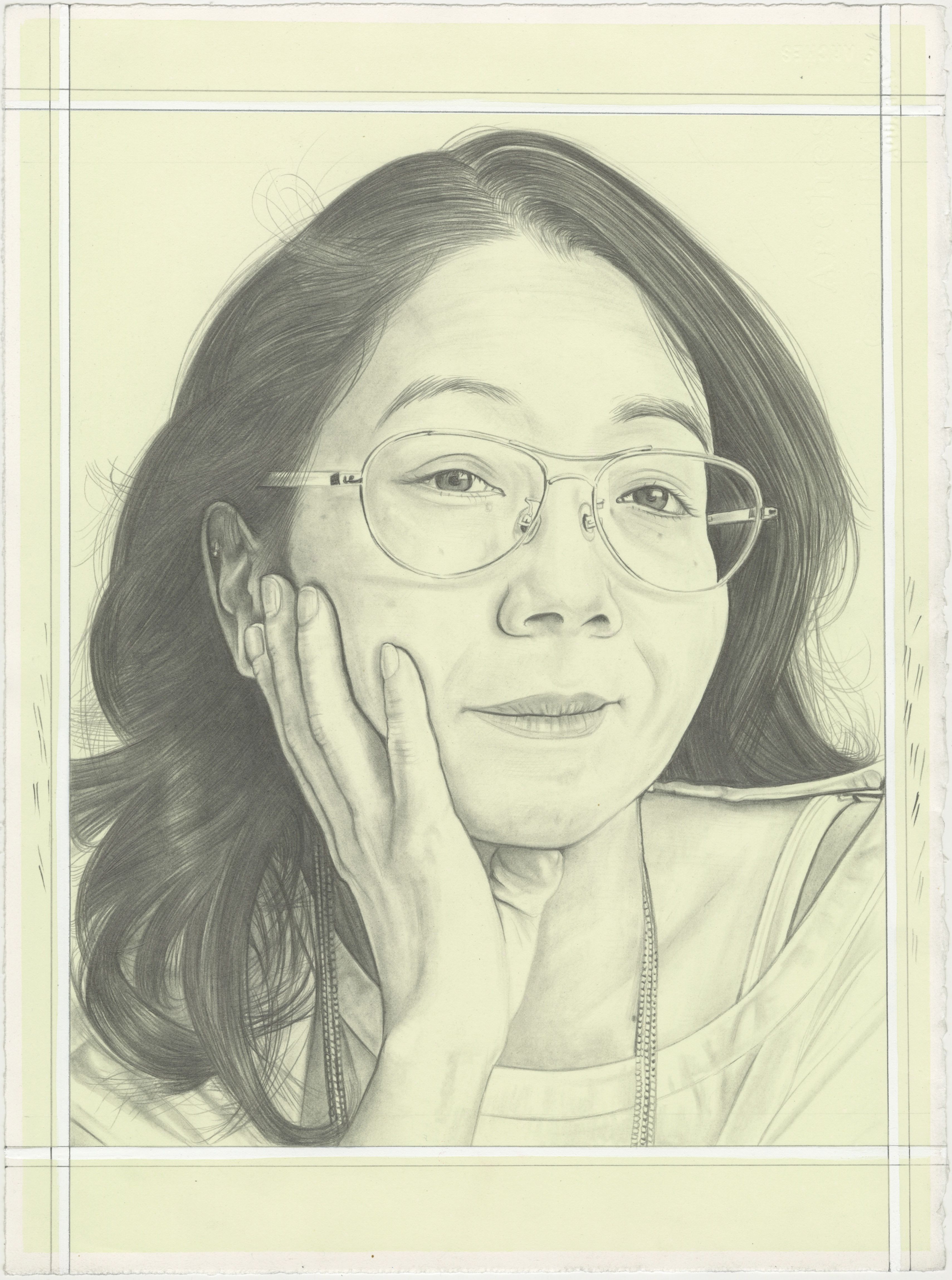
Yayoi by Phong Bui
Yayoi Shionoiri is the VP of External Affairs and General Counsel at Powerhouse Arts, a non-profit fabrication facility in Brooklyn with state-of-the-art equipment that allows artists the opportunity to work in different mediums, including print and digital print, ceramics, and fabrication of public art.
In the past, she has served as Executive Director to the Estate of Chris Burden and the Studio of Nancy Rubins; General Counsel and Head of Asia Strategy to Artsy; and Associate General Counsel of The Solomon R. Guggenheim Foundation.
Yayoi received her A.B. from Harvard University (2000), her J.D. from Cornell Law School (2003), and her M.A. from Columbia University in Modern Art (2010). She has written about, and presented throughout the world on, legal issues related to copyright and contemporary art, AI and digital art, and ethics related to new technology. (Instagram: @yayoi_shionoiri)
Mia: Yayoi, I'm super excited to talk to you!
Yayoi: I am deeply honored that you and I are in community in this way. What you're doing with the PUBLIC ART PARTY for the field of public art, and the public art ecosystem within the larger art world, is super inspiring. So thank you. I'm so excited that we're chatting.
I appreciate that so much. I worked for years in catering, and started a political organization in 2017. So to me the PUBLIC ART PARTY brings together art, party planning and community organizing, all things that I enjoy doing. I also think there’s a lot of need and desire for more community, and that right now politically, we need community more than ever.
Yayoi, I know you through the PUBLIC ART PARTY, but I'd love to learn more about where you're from, how you got interested in art and law, and how they came together.
I now consider myself fully a Brooklynite, but I'm originally from Canada, up north. And ever since I was in undergrad, I was an art and art history nerd. I was always very curious about visual material culture and objects as reflective of the times, or the cultural geographies, and the specific geographies that people come from. That for me was something that was of intellectual and academic interest.
But I'm an immigrant, and I wasn't really sure how to catapult my academic interest into a career, right? I was not part of the art world, either for-profit or not-for-profit. I didn't know how people became who they became. I didn't know how people became curators, or registrars, or conservationists. I didn't know how to become a gallerist.
So back in the day when I was a very young person, I said to myself, “Well, maybe if I bring a professional skill set to the art world, maybe I can be of service, and I can become something.” You know, if I had realized how difficult that would be, hustling as an arts worker, I'm pretty sure I would have decided to do something that is easier to achieve. That's how difficult it was.
It took a very, very long time for me to actually become an art lawyer, because back then, there weren’t a lot of role models for how people became art lawyers and stayed art lawyers. Now there are so many more of us who call ourselves art lawyers, and who practice either for profit or for not for-profit: for artists, for museums, for galleries, in auction houses.
I would say my art worker career, like many arts worker careers and many artist careers too, has been a large amount of trial and error and a constant hustle to find my standing in the art world. My very first art law job was an in-house legal and project management job for an artist, and then from there I had the honor, as well as the hustle, to jump around in various parts of the art world.
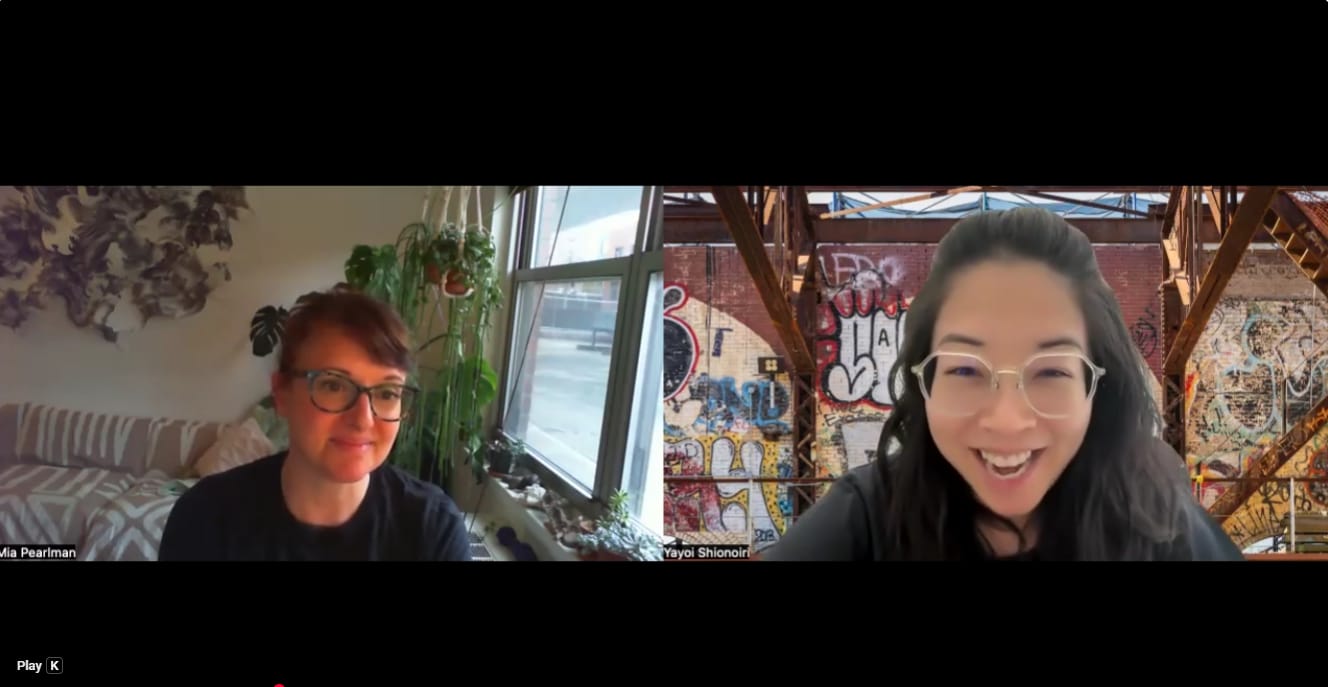
Brooklyn-to-Brooklyn Zoom
I'm very sympathetic to your plight, because it's very difficult to find your way in the art world, no matter what you do. Even if you have advantages–and you know, I'm from New York, so you'd think I would have had one–everybody has to find their own way. Did you consider at any point going in a different direction, like going into IP law, or doing something else, or did your interest in art and art history and the art world keep you on that track?
I think it's the latter. My first job was in a big law firm, but that was because as a baby lawyer in a conservative industry, it's important to showcase that you've had the opportunity to work in big law. That helped me get my financial stability and footing, in the sense that I was able to repay my student loans. From there it became much easier to take risks, and with luck and serendipity, but also a lot of hustle, I made that catapult into the art world.
In comparison to some other incredible art lawyers that I am deeply honored to be connected with, like Megan Noh and Sarah Conley Odenkirk, I would say the differentiating factor for me is that I've always been an arts worker-forward. It just happens that I have legal tools I can apply.
So I've never had to work in a law firm as an art lawyer. I've always been in-house for artists, for museums, for startups, for other non-profits. I feel like I can bring value not only with legal work, but by providing arts worker support, project management, strategic management or just a doer perspective. As I can know you can also relate, we all need to be interdisciplinary and wear many hats to make things work in the art world.
I'm sure that those skills and that knowledge were very appealing to some of the artists that you’ve worked with, like Nancy Rubins and Takashi Murakami, and for Artsy and the Guggenheim Museum. These are all entities or people who are working at a very high level, with a lot of risk involved. The bigger you get, the more is at stake, right?
Are there legal issues that people on the outside might not suspect are actually quite large? In public art, you negotiate insurance, VARA rights, reproduction rights, licensing, many things artists never learn about in art school. Of course fabricators have to negotiate contracts too, as do clients, curators and consultants.
Is there a place where you’ve seen problems happen because people either don’t understand what they've signed, or didn't negotiate it to the degree that it could have been?
There are so many ways to answer that very juicy question! So the first thing to note from an economic perspective, is that in the U.S., lawyers are often expensive to hire. I'm not making a judgment as to the value of the benefits and the services that are received. I'm just recognizing that in the U.S. lawyers usually work on an hourly basis, or sometimes a project basis, and in a place like New York City can command very, very high rates. In Japan, which is also a culture that I'm very connected to, for better or for worse hourly rates are much lower in comparison.
In Japan, if an artist receives an opportunity to make a site specific or permanent public art structure, many times they can have a line item within their project budget for legal fees. So in terms of having somebody who can read the contract, explain the contract to them, and try to negotiate aspects of the contract, it's more protective for the artist. Coupled with that, in the U.S., we also happen to have a very litigious society.
A lot of times, I think the contracts that are served up to artists are maybe sometimes repurposed from other industries. A good example is oftentimes I've seen an artist win a public, site specific commission. If the owner of the land on which the art is intended to be installed is a private real estate developer, the contract often looks more like a construction project agreement rather than a commissioned art agreement.
Obviously there is overlap, right? Because there is construction that will happen when the art gets placed. The foundation has to be poured. The work has to be engineered. Everything has to be signed, sealed and stamped. Then the artist comes in to install. Right? I mean, in some ways, I think the developer sort of treats it just as another part of their larger construction project.
But for an artist, they might get served up a 50-page construction contract feeling like A., they don't have the leverage to try to ask for something different. B., feel like they need to sign on to whatever is served. And then C., also not necessarily feeling like they can take the time or funding to try to find a lawyer who can help them understand the contract, negotiate it, and even begin to understand those provisions. Artists often feel so excited that they are being selected to do work, they feel like they don't necessarily have the leverage to be able to negotiate a contract.

Yayoi leading a tour of the Powerhouse Arts facilities
Absolutely. My first public art project was with a Fortune 500 company, and the budget was over a million dollars. I had no idea what I was doing when it came to contracts, insurance, banking, etc.
Luckily, a friend recommended an incredible art lawyer, Amy Goldrich, and she saved my life. It took months to negotiate this contract, and as you mentioned, they initially presented a construction contract, and had never worked on an art project. She rejected that out of hand, and we sent our own contract. But there were still crazy things like, can they make holiday replicas of the sculpture, and if so, can they be for sale, or only to gift to certain people? I never, ever would have imagined having to negotiate things like this.
But negotiating itself is kind of fun to me. In my experience, if you operate in a polite, firm, professional way, the client’s respect for you increases. If you walk in knowing your red lines, where you'll give, where you won't, the other team listens and often agrees to your terms, or at least considers a compromise.
Artists often know our red lines, but can be too scared to engage. There can be a scarcity mentality, and an understandable fear of rejection. I think that everyone in the arts has at least once felt pressured to accept a bad deal, just to get (or keep) the gig. So, do you have any thoughts about how artists or others could feel more confident? How can they go into a negotiation without feeling like they are at a disadvantage?
Thanks for that. You speak so eloquently about the importance of negotiation strategies, and that doesn't mean somebody has to be versed in drafting a contract. I think it's very important for an artist to be able to say, “These are the three to five things that are really important to me that I will not back down from.” It might be the dollar amount of a contract, or a payment schedule. Like I definitely want to be paid in this kind of a way, or I require this level of transparency.
If it is a gallery, for example, I–as the artist, would want the ability to know how sales are going. Even if the sale is not necessarily 100% done, I would want updates on sales and marketing. Or if I'm having a gallery show, I would like to commission someone to write an essay about me for inclusion in the press release or on the website. It can be as minute as that, or it can be much bigger.
I think you can build confidence from each experience too. Like your first project was a really, really difficult one because you were working with a Fortune 500 company, right? They had a ton of resources behind them, but they also wanted to be super protective, and potentially extractive from you. That's just how they are. When you went in and you felt confident, the other side was willing to negotiate with you. From there, the next contract negotiation gets a little bit easier.
Sometimes the lawyer on the other side may not necessarily know how to work with artists either. They may have had a lot of extensive experience working with construction people or interior designers, who are very different from artists in terms of how they work. They might not have had an opportunity to work with artists. So that level setting is important too.

Powerhouse Arts Print Fair
For many artists, it feels like such a huge power differential that if you create any friction, you're out. But I think that lawyers like friction. Friction is not bothersome to them. In my experience, the same is true for big commissioning bodies, whether they're private corporations or municipalities. They negotiate contracts all the time, so they're not scandalized if you want to discuss terms. Some, especially government entities, categorically do not negotiate. Like the MTA, for example. They tell you off the bat that the contract is take it or leave it. But at least you know, and can make an informed decision about moving forward.
I think you're totally right. The only thing that I would add to that is how important it is for both sides to stay professional and respectful, even if there is a difference of opinion. If an artist responds to emails promptly, if they ask for clarification politely, and there is a level of professionalism on both sides, together they can hopefully work through differences of opinion.
You’ve worked with artists who have these huge studio operations, and some artists have big legal disputes with galleries, collectors, fabricators, etc. But unless you've actually worked in one of their studios (which I personally have not), you don't really know what it’s like.
At the end of the day, an artist studio is a small business. You have a legal entity, and you have to do everything that is required of a small business owner in addition to being an artist, right? So, that's more than two people's jobs.
You might have a lease, or own your studio. You have to pay taxes. You need to have an insurance scheme that protects you as an artist, but also a lot of your commissioning entities will require you to have set levels of insurance. If you have staff, you have payroll. You might pay somebody hourly as a contractor, or as an employee. If you have employees, you have employee payroll and tax matters. Providing artists with the tools to understand that they are small business owners in addition to being artists is also very important too.
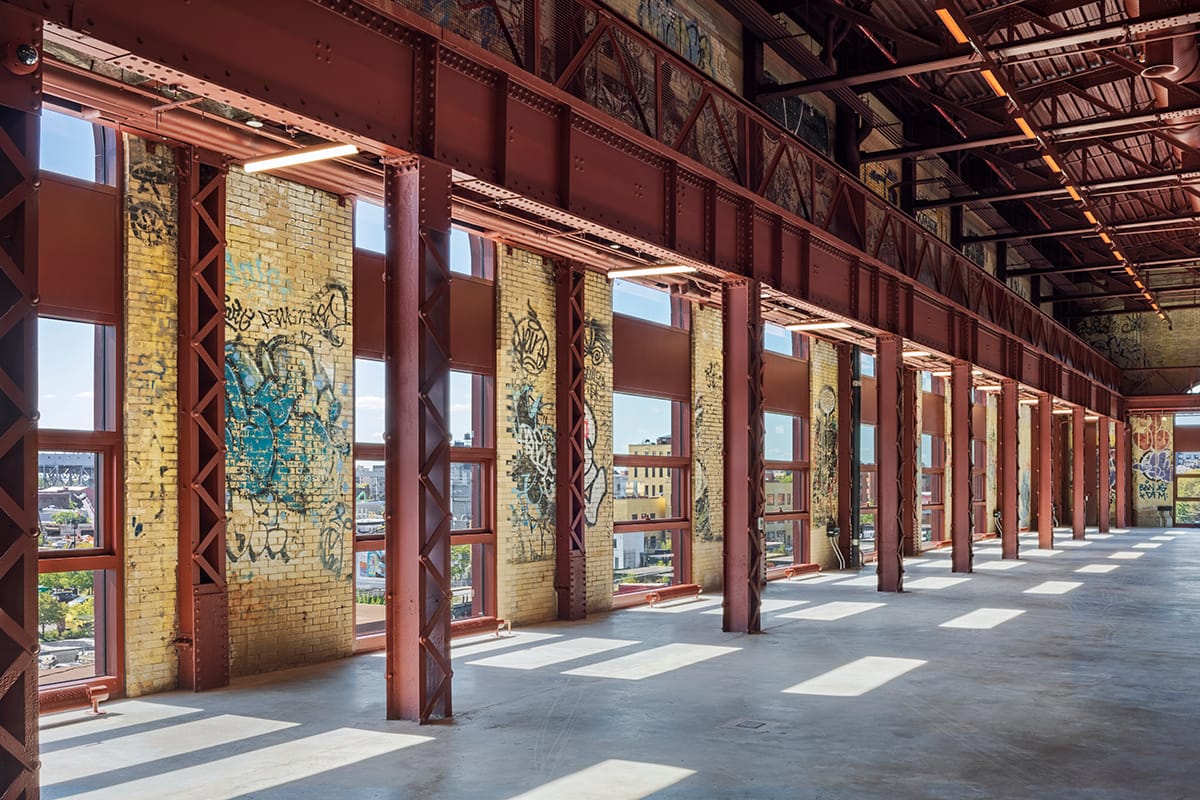
Powerhouse Arts Grand Hall, photo: Albert Vecerka
Powerhouse is such an impressive operation, from the variety of fabrication that takes place there, to the community programs, art fairs, and soon an exhibition program. How can people in the public art world participate?
Thanks for that question and I'm very, very excited for us to be able to host your third PUBLIC ART PARTY on April 16th.
I think it might be a little hard to understand what Powerhouse is, because we're trying to serve so many publics. It’s usually after someone attends an event or gets a chance to see the fabrication shops, that they really get an idea of what we do. Vis a vis the public art community, we are going to give a short tour of the public art facilities during the PUBLIC ART PARTY, and I hope that people will come back to experience more.
If you’re a curator, or a commissioning entity, and have an opportunity to work with an artist, please keep Powerhouse Arts in mind. You can always feel free to reach out through our project inquiry form on our website to start the conversation.
Our public art team also collaborates with other shops and studios within the building all the time. This cross hybridity is what we offer.
What if someone wants to curate a show, or do a concert here, or perform an experimental dance piece at Powerhouse?
We are self-producing our own events for now, whether that is Powerhouse: International, the festival that's focused on performing arts, or the two fairs that are coming down the pike: Brooklyn Fine Art Print Fair (April 9-12) and Conductor: Art Fair of the Global Majority (April 29-May 3). If somebody is interested in renting space, that depends on whether we have space in the calendar and if we are the right space for them. We have an Artist in Residence program, but we generally do not rent studio space.
We are trying to be a place both of cultural production through our fabrication facilities and access to fabrication facilities, and a place of cultural consumption, meaning we are trying to provide artists an opportunity to showcase their work. So, we're trying to be a hive campus for creative expression.
We are very excited to introduce Powerhouse Arts to everyone at the PUBLIC ART PARTY, and give the audience a little taste of what is possible here.

Powerhouse Arts Print Studio
I hope you can come to the PUBLIC ART PARTY at Powerhouse on April 16th, so Yayoi can take you on one of her amazing tours of the facilities!
Thanks for reading, and please comment and make suggestions for others I should interview…

Mia Pearlman
http://miapearlman.com
Reply